How to Start a Blog in 2026: A Complete Beginner’s Guide
how to start a blog in 2026 Blogging is still an effective way to share knowledge, build an online audience, promote a business, and create potential income opportunities. With the growth of digital content, starting a blog in 2026 can be a great option for beginners who have useful ideas, knowledge, or experiences to share.
If you are wondering how to start a blog in 2026, the process is easier than it may seem. You do not need to be a professional writer or web developer. With the right topic, blogging platform, domain name, hosting, and SEO strategy, you can create your own blog and start publishing content.
In this guide, you will learn how to start a blog in 2026 step by step. how to start a blog in 2026
What Is a Blog? How to Start a Blog in 2026
how to start a blog in 2026. A blog is a website or section of a website where individuals, businesses, or organizations regularly publish articles and other types of content.
Blogs can cover almost any topic, including technology, finance, travel, health, education, digital marketing, food, lifestyle, and personal development.
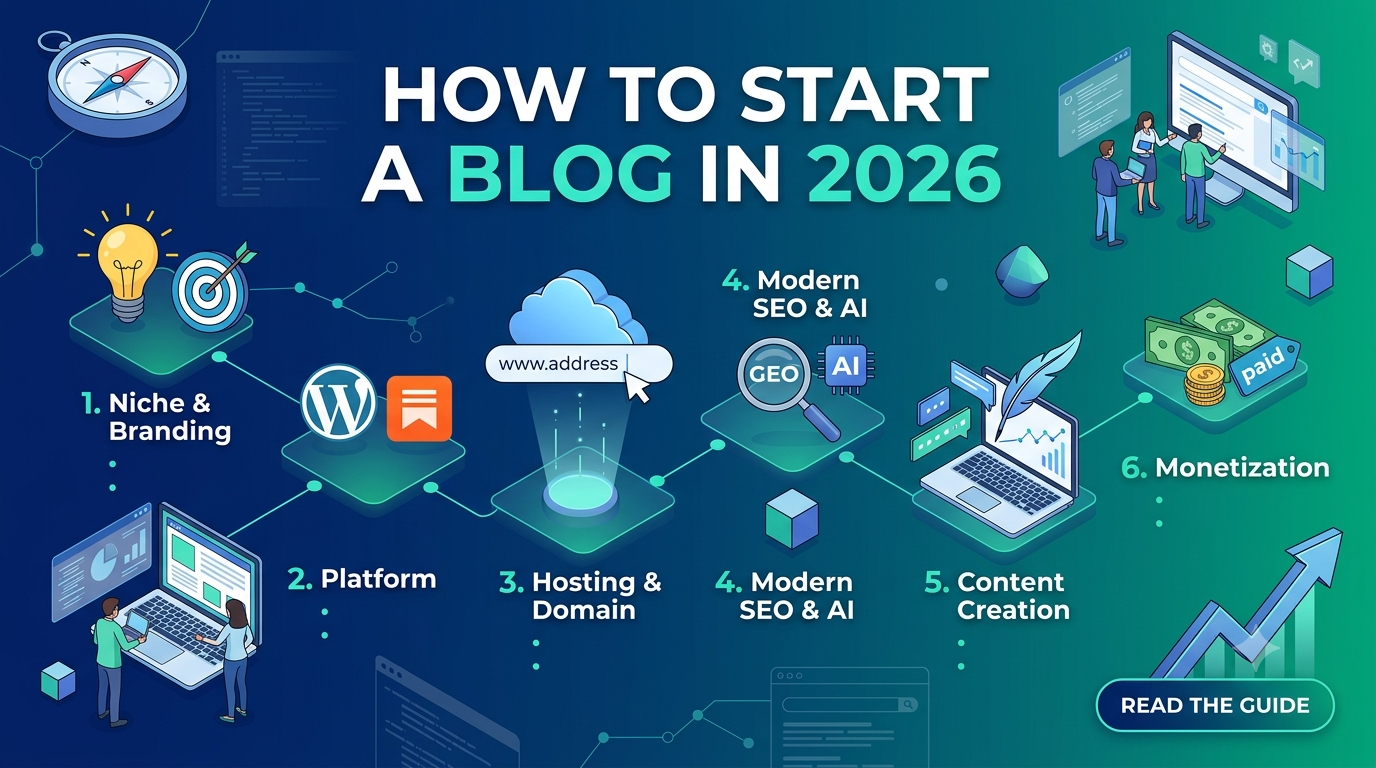
Step 1: Choose a Blog Niche
how to start a blog in 2026. A successful blog generally focuses on a specific audience and provides useful, original, and relevant information.
The first step in learning how to start a blog in 2026 is choosing the right niche.
A niche is the specific topic or industry your blog will focus on. Instead of writing about everything, choosing a focused topic can help you attract a more relevant audience.
Some popular blog niches include:
- Digital marketing
- Technology
- Personal finance
- Stock market education
- Travel
- Fitness
- Food and recipes
- Education
- Career development
- Artificial intelligence
Choose a topic that you understand or are genuinely interested in. You should also consider whether people are searching for information about that topic.
Step 2: Choose a Blog Name
how to start a blog in 2026. Once you have selected your niche, choose a memorable name for your blog.
Your blog name should be:
- Easy to remember
- Easy to spell
- Relevant to your niche
- Short and simple
- Suitable for long-term use
Avoid using complicated words or names that are difficult to type. Before finalizing your name, check whether the matching domain name is available.
Step 3: Register a Domain Name
A domain name is the web address people use to visit your blog.
For example, a website might use a domain such as example.com.
Try to choose a domain that matches your blog name. A .com domain is commonly recognized, but other relevant domain extensions can also be considered.
Keep your domain short and avoid unnecessary numbers, hyphens, or complicated spellings.
Step 4: Choose Web Hosting
After registering your domain, you need web hosting. Hosting stores your website files and makes your blog accessible online.
When choosing hosting, consider factors such as:
- Website speed
- Uptime
- Security
- Customer support
- Backup options
- Scalability
- Pricing
For beginners, a hosting provider with an easy-to-use control panel and simple WordPress installation can make the setup process easier.
Step 5: Install WordPress
WordPress is one of the most popular platforms for creating websites and blogs.
Most modern hosting providers offer an easy WordPress installation process. After installing WordPress, you can log in to your dashboard and start customizing your website.
You can select a theme, create pages, install useful plugins, and configure important website settings.
Step 6: Choose a Professional Blog Theme
Your blog design plays an important role in user experience.
Choose a clean, responsive theme that works well on desktops, tablets, and mobile devices.
Your website should have:
- Simple navigation
- Easy-to-read fonts
- Clear headings
- Fast-loading pages
- Mobile-friendly design
- Consistent branding
Avoid adding too many animations, pop-ups, or unnecessary elements that can make your website difficult to use.
Step 7: Create Important Pages
Before publishing many blog posts, create the essential pages your website needs.
These may include:
- Home
- About Us
- Contact Us
- Privacy Policy
- Terms and Conditions
- Disclaimer
These pages can help visitors understand your website and provide important information about your blog.
Step 8: Do Keyword Research
Keyword research is an important part of SEO and blogging.
Keywords are words or phrases that people enter into search engines when looking for information.
For example, if your blog is about digital marketing, keywords might include:
- Digital marketing tips
- SEO for beginners
- Content marketing strategy
- Social media marketing
- How to improve website traffic
You can use SEO tools such as Google Keyword Planner, Google Search Console, Semrush, Ahrefs, and other keyword research tools to discover relevant topics and search terms.
Step 9: Write High-Quality Blog Content
Once your website is ready, start creating useful content for your target audience.
A good blog post should answer the reader’s question clearly and provide genuine value.
When writing an article:
- Use a clear title
- Add relevant headings and subheadings
- Keep paragraphs short
- Use bullet points where appropriate
- Add relevant images
- Include internal links
- Use keywords naturally
- Write for readers first
Avoid keyword stuffing. Search engines are designed to understand content and user intent, so naturally written and helpful content should be your priority.
Step 10: Optimize Your Blog for SEO
Search engine optimization can help your blog become more visible in search results.
Basic SEO optimization includes:
- Using a relevant primary keyword
- Creating an SEO-friendly title
- Writing a useful meta description
- Optimizing headings
- Adding descriptive image alt text
- Creating internal links
- Improving page speed
- Making your website mobile-friendly
- Fixing broken links
- Creating an XML sitemap
You can also connect your website with Google Search Console to monitor search performance and indexing.
Step 11: Promote Your Blog
Publishing an article is only the beginning. You also need to promote your content to reach more people.
You can promote your blog through:
- Social media
- Email newsletters
- Online communities
- YouTube
- Guest posting
- Networking with other creators
Focus on platforms where your target audience is active.
Step 12: Monetize Your Blog
Once your blog starts receiving regular traffic, you can explore different monetization methods.
Some common options include:
- Display advertising
- Affiliate marketing
- Sponsored content
- Digital products
- Online courses
- Consulting services
- Memberships
Do not focus only on making money when starting a blog. First, build useful content and develop trust with your audience.
Common Blogging Mistakes to Avoid
Beginners often make mistakes that can slow down their blogging progress.
Avoid publishing low-quality or copied content, targeting too many unrelated topics, ignoring SEO, using excessive keywords, and giving up too quickly.
Blogging usually requires consistency. It may take time for your content to gain visibility and attract organic traffic.
Final Thoughts
Learning how to start a blog in 2026 is easier when you follow a clear process. Start by choosing a niche, selecting a memorable domain name, setting up reliable hosting, installing WordPress, and creating a user-friendly website.
After setting up your blog, focus on keyword research, high-quality content, SEO, and consistent promotion. Over time, you can build an audience and explore different ways to monetize your website.
The key to successful blogging is not simply publishing more articles. It is about consistently creating useful content that solves problems, answers questions, and provides value to your readers.