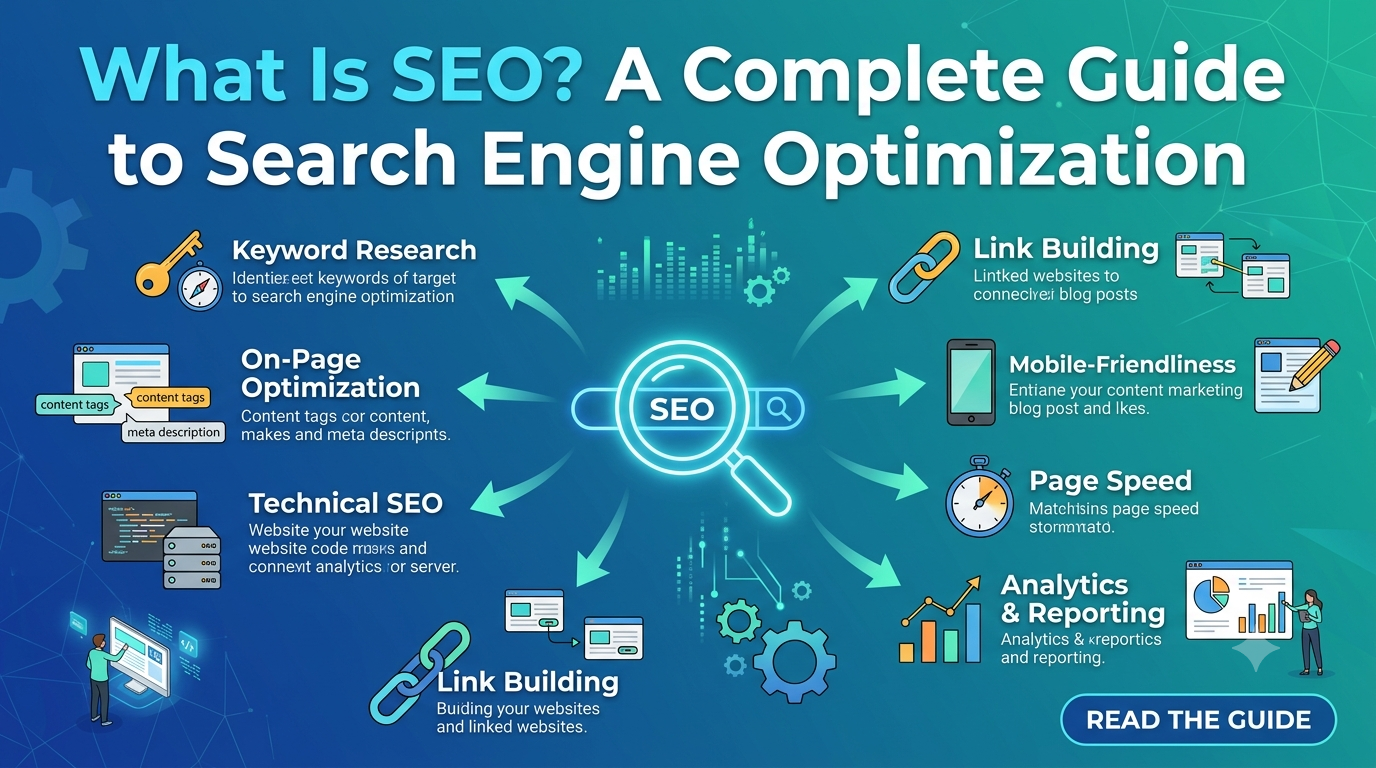
SEO? A Complete Guide to Search Engine Optimization
If you have a website, blog, online store, or business, you have probably heard the term SEO. But Search Engine Optimization (SEO), and why is it important for online success? SEO stands for Search Engine Optimization. It is the process of improving a website and its content so that search engines can understand it better and show it to relevant users in search results.
SEO can help businesses increase their online visibility, attract organic traffic, reach potential customers, and build long-term online growth. Unlike paid advertising, organic SEO focuses on earning visibility through useful content, technical improvements, and a better website experience.
Search Engine Optimization (SEO)
Search Engine Optimization (SEO) in simple words? SEO is a collection of strategies and techniques used to improve a website’s visibility in search engine results.
When someone searches for something on Google or another search engine, the search engine analyzes numerous web pages to determine which results are most relevant to the user’s query. SEO helps your website provide clear, useful, and well-structured information that search engines can understand.
For example, if you run a digital marketing agency and publish an article about “digital marketing strategies,” SEO can help that article appear when people search for related terms.
How Does Search Engine Optimization Work?
Search engines use automated systems to discover, understand, and organize web pages. While search algorithms are complex and constantly evolving, SEO generally involves making your website easier for both search engines and users to understand.
Search engines consider many signals when determining which pages should appear for a particular search. These can include the relevance and usefulness of the content, website structure, links, page experience, and other technical factors.
A successful SEO strategy therefore focuses on creating valuable content while maintaining a technically sound and user-friendly website.
Why Is SEO Important for a Website?
SEO is important because search engines are a major way people discover information, products, services, and businesses online.
Here are some major benefits of SEO:
1. Increase Organic Traffic
A strong SEO strategy can help your pages appear for relevant searches. When your pages receive higher visibility, they can attract more visitors without requiring you to pay for every click.
2. Improve Online Visibility
SEO makes it easier for potential customers to discover your website. Consistently publishing useful content around relevant topics can increase your presence in search results.
3. Build Trust and Credibility
Websites that consistently provide useful, accurate, and well-organized information can build credibility with their audiences. High-quality content and a professional website experience can contribute to user trust.
4. Generate Long-Term Results
Paid advertising can provide immediate visibility while a campaign is running. SEO generally takes time, but successful organic pages can continue attracting visitors over an extended period.
Major Types of
SEO is a broad field that includes several important areas. Understanding these areas can help you create a more complete optimization strategy.
On-Page SEO
On-page focuses on elements that you can optimize directly on your website.
Some important elements include:
- Page titles
- Meta descriptions
- Headings
- Keyword usage
- Content quality
- Internal links
- Image optimization
- URL structure
The goal is to make your content relevant, useful, and easy for both visitors and search engines to understand.
Technical SEO
Technical focuses on the technical foundation of your website.
Important areas include:
- Website crawling and indexing
- Mobile usability
- Page speed
- Website security
- Structured data
- XML sitemaps
- Canonical URLs
- Site architecture
A technically healthy website can make it easier for search engines to discover and process your pages.
Off-Page SEO
Off-page SEO refers to activities that take place outside your website but can influence its visibility and reputation.
One major part of off-page is earning relevant backlinks from other websites. A backlink is a link from another website to your website.
However, SEO is not simply about getting as many backlinks as possible. Relevance, quality, and the overall context of links matter.
What Are SEO Keywords?
Keywords are words or phrases that people use when searching for information online. Keyword research helps you understand what your target audience is searching for.
For example, someone interested in learning might search for:
- Search Engine Optimization (SEO)
- SEO for beginners
- How does SEO work
- SEO tips
- Best SEO tools
Using relevant keywords naturally in your content can help search engines understand the subject of your page.
However, repeatedly inserting keywords into content can make it difficult to read and may create a poor user experience. Instead, focus on writing naturally and covering the topic comprehensively.
How to Create an Effective SEO Strategy
Creating an strategy does not have to be complicated, especially when you are starting.
First, identify your target audience and understand what information they need. Then perform keyword research to find relevant topics and search queries.
Next, create useful content that directly answers users’ questions. Optimize important on-page elements such as titles, headings, URLs, images, and internal links.
You should also make sure your website works well on mobile devices and provides a good user experience. Regularly monitor your website performance and update older content when necessary.
is an ongoing process rather than a one-time activity. Search behavior, competitors, websites, and search engine systems can change over time.
Common SEO Mistakes to Avoid
Beginners often make several common mistakes. One mistake is focusing too heavily on keywords instead of the reader. Another is publishing low-quality or duplicate content simply to increase the number of pages on a website.
Other mistakes include ignoring technical , using unclear website structures, neglecting mobile users, and building backlinks through low-quality or irrelevant methods.
Instead, focus on creating helpful content, maintaining a technically sound website, and providing a positive experience for visitors.
How Long Does Take to Work?
usually does not produce instant results. The time required can vary depending on factors such as competition, website history, content quality, technical condition, industry, and the search queries being targeted.
New websites may need time to establish visibility, while established websites with strong content and authority may see changes more quickly.
The best approach is to treat as a long-term strategy. Consistent optimization, content improvement, technical maintenance, and performance monitoring can help build sustainable organic visibility.
Conclusion
So, Search Engine Optimization ? Search Engine Optimization is the process of improving a website so that search engines can better understand its content and users can find relevant information more easily.
includes on-page optimization, technical , off-page activities, keyword research, content creation, and website improvements. When these elements work together, they can help a website increase organic visibility and attract relevant visitors.
If you are a beginner, start with the fundamentals: understand your audience, research relevant topics, create helpful content, optimize your pages, improve your website’s technical foundation, and monitor your results. With consistent effort, can become an important part of your long-term digital marketing strategy.